What You Should Provide Before Hiring a Dissertation Writing Service (Documents Checklist)
By Writing Gram • Jun 17, 2026
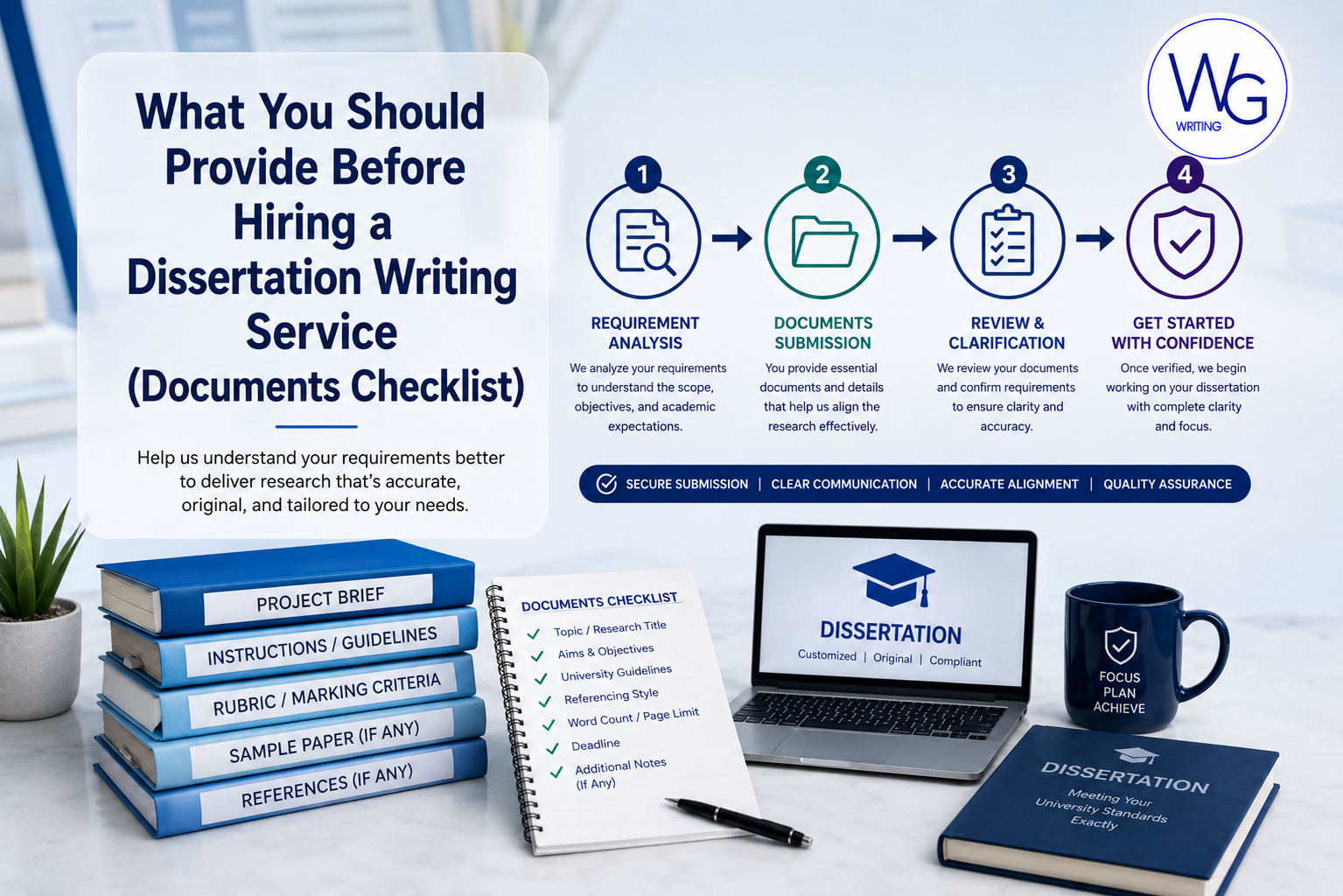
Planning to hire a dissertation writing service? Learn exactly what documents, instructions, research materials, and requirements to prepare before placing your order. Use this complete dissertation documents checklist to avoid delays and get better results.
What You Should Provide Before Hiring a Dissertation Writing Service
The quality of dissertation assistance depends on the information a student provides before the project begins. Even the most experienced dissertation writer can only work with the details, instructions, and materials available to them. When expectations are clearly communicated from the start, it becomes much easier to produce work that reflects the student's research goals, academic requirements, and university standards.
Many students focus on choosing a dissertation writing service but spend less time preparing the information needed for the project. This can create avoidable challenges later in the dissertation writing process. Missing documents, unclear instructions, or incomplete requirements may lead to misunderstandings, additional revisions, and delays that could have been prevented with proper preparation.
Before placing an order, it is helpful to gather all relevant materials in one place. This allows the writer to review the project thoroughly and understand exactly what is expected. Some of the most important items may include:
Dissertation proposal or approved research topic
University guidelines, rubric, and marking criteria
Research objectives and research questions
Previous coursework related to the topic
Supervisor feedback and recommendations
Formatting and citation requirements
Relevant research sources and supporting materials
Submission deadlines and milestone dates
Students frequently ask what to provide a dissertation writer before placing an order. The answer is simple: provide any document or instruction that helps explain your project's requirements, expectations, and academic context. The more complete the information, the easier it becomes to deliver work that aligns with your dissertation goals.
In this guide, we will walk through the essential documents and information students should prepare before hiring a dissertation writing service. By following this checklist, you can reduce confusion, improve communication, and help ensure your dissertation project starts on the right foundation.
If you are looking for reliable dissertation assistance, Writing Gram makes the process straightforward. You can upload your proposal, university guidelines, supervisor feedback, research materials, and other supporting documents directly with your order, helping our dissertation specialists understand your requirements from the beginning.
Place your order today to benefit from expert dissertation support, clear communication, secure document handling, timely delivery, and a process designed to save you time while supporting your academic goals.
Why Preparing Your Dissertation Documents Matters
Preparing your documents before hiring a dissertation writing service is one of the most important steps in the dissertation writing process. The information you provide helps establish clear expectations, reduces misunderstandings, and gives the writer a complete understanding of your project requirements from the beginning.
Many students focus on finding dissertation assistance but overlook the importance of organizing their materials before placing an order. However, knowing how to prepare for a dissertation service can significantly improve communication and help ensure that the final work reflects the project's objectives, research direction, and university requirements.
A well-prepared order allows the writer to evaluate the scope of the project more accurately and develop a structured plan for completing the work. It also helps prevent delays that can occur when important information is missing or provided later in the process.
Benefits of Preparing Your Documents Before Placing an Order
Helps Writers Understand Project Expectations
Every dissertation has unique requirements. Even students within the same degree program may receive different instructions from supervisors or departments.
Providing key documents such as your proposal, research questions, university guidelines, and supervisor feedback helps the writer understand:
The purpose of the research
Specific academic requirements
The intended research outcomes
Any special instructions from your department
When expectations are clear from the start, there is less room for confusion when writing your dissertation.
Reduces Back-and-Forth Communication
Incomplete instructions often result in additional emails and clarification requests. While communication is an important part of any dissertation project, unnecessary back-and-forth can slow progress.
Providing complete information upfront helps:
Minimize clarification requests
Reduce avoidable revisions
Streamline project planning
Improve overall efficiency
This is why many students use a dissertation order instructions guide before placing an order. Having all documents ready allows the project to begin with a clear understanding of the requirements.
Improves Consistency With University Requirements
Universities frequently have specific expectations regarding:
Dissertation structure
Citation style
Formatting standards
Providing these documents helps ensure that the work is developed according to the guidelines established by your institution rather than relying on general assumptions.
Research on academic writing support has highlighted the importance of clear expectations, structured guidance, and effective communication throughout the research writing process. A recent peer-reviewed study published in Frontiers in Education found that doctoral students and supervisors consistently identified clear guidance and support structures as important factors in managing academic writing requirements.
Supports Accurate Pricing and Timelines
Dissertation projects can vary significantly in complexity. Factors such as word count, research requirements, methodology, data analysis needs, and deadlines all influence project planning.
Providing complete information allows for:
More accurate project assessment
Realistic delivery schedules
Better workload planning
Clear expectations regarding revisions and milestones
Ensures accurate pricing, which is important since it ensures that your dissertation meets the expected academic standards.
Without sufficient information, it may be difficult to determine the true scope of the project.
Increases the Likelihood of Receiving Work That Matches Your Requirements
One of the primary goals of preparation is ensuring that the writer understands exactly what you need.
When students provide:
Detailed instructions
Research objectives
Supervisor recommendations
Relevant source materials
University guidelines
The resulting work is more likely to reflect the project's intended direction and requirements.
Quick Answer: Why Should You Prepare Documents Before Hiring a Dissertation Writing Service?
Preparing your documents before placing an order helps the writer understand your expectations, follow university requirements, plan the project accurately, and develop work that aligns with your dissertation goals. The more complete your instructions and supporting materials are, the easier it becomes to create a well-structured dissertation that meets your specified requirements.
Dissertation Proposal or Approved Research Topic
One of the first and most important documents to provide when seeking dissertation assistance is your approved dissertation proposal or research topic. This document serves as the foundation of the entire project and helps establish a clear understanding of what the dissertation is intended to investigate.
Students who are unsure what to provide a dissertation writer should start with the materials that define the scope of the research. Without a clearly established topic and supporting proposal documents, it can be difficult to determine the appropriate research direction, methodology, literature, and chapter structure.
Documents to Share
If available, provide the following information when placing your order:
Approved dissertation proposal
Dissertation or thesis title
Research objectives
Research questions
Hypothesis (if applicable)
Research aims
Proposal feedback from supervisors or review committees
Even if your proposal is still being revised, sharing the latest version can help communicate your intended research focus.
Why the Dissertation Proposal Matters
The proposal is often the first document that explains the purpose of the research and the issues the dissertation intends to address. It provides context that cannot be captured through a title alone.
A well-developed proposal helps:
Establish the overall direction of the project
Clarify the research problem being investigated
Identify the intended scope of the study
Prevent misunderstandings about the topic
Support consistency and coherence across dissertation chapters
Ensure that the literature review, methodology, findings, and discussion remain connected to the same research objectives
When a proposal is missing, there is a greater risk of assumptions being made about the project's focus, which can create challenges later in the dissertation process.
Research Objectives and Research Questions Are Essential
Research objectives and research questions are particularly important because they guide the entire dissertation.
Research objectives explain what the study aims to accomplish, while research questions identify the specific issues the research seeks to answer.
For example, these elements help determine:
Which sources are relevant for the literature review
Whether the final discussion addresses the original purpose of the study
Because these components influence every chapter, they are among the most important items included in a dissertation order instructions guide.
Include Your Hypothesis if Applicable
For dissertations that use quantitative methods, a hypothesis may be required. Providing the approved hypothesis helps ensure that data collection, statistical analysis, and interpretation remain focused on the intended research relationships.
Students in fields such as business, psychology, healthcare, education, economics, and social sciences are often expected to align their methodology and analysis with clearly defined hypotheses.
Clear Research Planning Supports Better Dissertation Development
The importance of clearly defining research aims, questions, and study objectives has been recognized in recent academic research. A peer-reviewed study published in the Psychiatry Research Journal emphasizes that well-formulated research questions play a critical role in guiding study design, methodology selection, and overall research quality. This highlights why providing a complete proposal and research framework is an important part of how to prepare for a dissertation service.
What Information Should I Give a Dissertation Writer First?
The approved dissertation topic, research objectives, research questions, and proposal are usually the first documents you should provide. These materials define the project's scope, establish the direction of the research, and help ensure that every stage of dissertation development is built around the same academic goals and requirements.
University Guidelines and Assessment Requirements
University guidelines are among the most valuable documents you can provide when seeking dissertation assistance. While dissertation topics may be similar across institutions, the requirements used to assess those projects often differ significantly. A dissertation that meets the expectations of one university may not fully satisfy the requirements of another.
For this reason, students should include all available institutional documentation when preparing their materials. This is an important part of how to prepare for a dissertation writing service and can help ensure that the project is developed according to the standards established by the university.
Documents to Upload
When placing your order, try to provide:
Dissertation handbook
Marking rubric
Department guidelines
Faculty instructions
Dissertation module requirements
Formatting requirements
Assessment criteria documents
Any emails containing official dissertation instructions
These materials provide detailed information that may not be included in the dissertation proposal itself.
Why University Requirements Matter
Universities often establish specific expectations regarding both the content and presentation of a dissertation. These requirements may affect:
Chapter organization and structure
Minimum and maximum word counts
Referencing and citation styles
Formatting standards
Research methodology expectations
Assessment criteria used by examiners
Requirements for appendices, tables, and figures
Without access to these guidelines, important institutional requirements can easily be overlooked.
Assessment Rubrics Provide Valuable Insight
Many students focus on the dissertation topic but forget to provide the marking rubric. However, assessment rubrics often reveal exactly how dissertations are evaluated.
For example, a rubric may allocate marks for:
Quality of literature review
Research design
Data analysis
Critical evaluation
Presentation and organization
Referencing accuracy
Discussion of findings
Understanding these assessment priorities helps ensure that the project receives appropriate attention across all evaluated areas.
Department Requirements May Differ From General University Policies
In many institutions, dissertation expectations are established at multiple levels. While the university may provide general dissertation regulations, individual departments often introduce additional requirements specific to their discipline.
For example:
Business schools may require practical recommendations.
Nursing programs may emphasize evidence-based practice.
Education departments may require reflective analysis.
Engineering faculties may focus heavily on technical methodology.
Social science programs may have distinct research design requirements.
Providing department-specific guidance helps clarify these discipline-related expectations.
Formatting Instructions Should Never Be Assumed
Formatting requirements can vary considerably between institutions. Even when universities use the same citation style, they may apply different formatting rules for:
Title pages
Tables of contents
Headings and subheadings
Appendices
Figure labeling
Reference lists
Margin and spacing requirements
Including formatting instructions within your dissertation order instructions guide can help avoid unnecessary revisions later..
Institutional Expectations Influence Dissertation Quality
The importance of aligning academic work with assessment expectations is reflected in higher education research. A peer-reviewed study published in the International Journal of Research in Education and Science found that transparent assessment criteria and clear guidance play a significant role in supporting student performance and understanding of academic expectations.
Do Dissertation Writers Need University Guidelines?
Yes. University guidelines help ensure the dissertation follows the structure, formatting standards, assessment requirements, and institutional expectations established by the university. Documents such as dissertation handbooks, marking rubrics, department instructions, and formatting requirements provide essential information that helps support a more accurate and well-informed approach to the project.
Previous Coursework and Related Academic Documents
Many students focus on providing their dissertation topic and university guidelines, but overlook another valuable source of information: previous academic work. Coursework completed earlier can provide useful context that helps clarify expectations, demonstrate academic standards, and show how the dissertation fits within the student's broader area of study.
As part of how to prepare for a dissertation service, it is often beneficial to gather relevant academic documents that relate directly to the dissertation topic or research area. These materials can help provide a clearer picture of the project's background and development.
Useful Documents to Share
Depending on your program and subject area, helpful materials may include:
Literature review assignments
Research proposals
Previous essays
Supervisor feedback
Research methods assignments
Seminar papers
Project reports
Annotated bibliographies
Coursework related to the dissertation topic
Not every document will be relevant, but materials connected to the research area can provide valuable context.
Demonstrates Academic Level Expectations
Previous coursework can help illustrate the level of analysis, critical thinking, and research expected within a specific program.
For example, a master's dissertation may require a different depth of discussion than an undergraduate dissertation, while doctoral projects often involve more advanced theoretical and methodological considerations.
Relevant coursework can help demonstrate:
The expected complexity of academic discussions
The depth of source engagement is commonly required
Subject-specific terminology
The style of argumentation used within the discipline
Common themes explored throughout the degree program
This information can be particularly useful when preparing a detailed dissertation order instructions guide.
Helps Maintain Consistency Across Academic Work
Many dissertation topics evolve from earlier assignments completed during a degree program. A literature review assignment, research proposal, or capstone project may already contain foundational ideas that contribute to the dissertation.
Providing these materials can help ensure consistency in areas such as:
Research focus
Terminology
Theoretical frameworks
Topic development
Existing academic discussions
Consistency is especially important when a dissertation builds directly upon work completed in previous modules or courses.
Reduces the Risk of Unnecessary Duplication
One challenge students occasionally face is unintentionally repeating content that has already been submitted in earlier coursework.
Sharing previous assignments allows relevant material to be reviewed and helps identify areas where overlap may occur. This supports better planning and can help distinguish between prior work and new dissertation content.
For students asking what to provide a dissertation writer, previously submitted assignments can be particularly useful when they are closely related to the dissertation topic or research objectives.
Literature Reviews and Research Proposals Provide Additional Context
Among all previous academic documents, literature reviews and research proposals are often the most informative.
These documents may reveal:
Key authors already discussed
Research gaps previously identified
Preliminary findings or observations
Areas that require further investigation
This background can help establish continuity between earlier academic work and the dissertation itself.
Previous Academic Work Can Support Research Development
The value of building upon prior academic work has been recognized in higher education research. A peer-reviewed study published in Frontiers in Psychology found that academic writing development is strengthened when students are able to connect new writing tasks with previous learning experiences and disciplinary knowledge, highlighting the importance of continuity throughout the research process.
What Previous Coursework Should I Send for Dissertation Help?
The most useful documents are those directly related to your dissertation topic, research area, or degree program. Literature reviews, research proposals, previous essays, capstone projects, and supervisor feedback can provide important context, demonstrate academic expectations, and help maintain consistency throughout the dissertation development process.
Research Sources and Reference Materials
Research sources and reference materials are often overlooked when students prepare to hire a dissertation writing service. While a dissertation proposal and university guidelines establish the project's direction, the sources you provide can help clarify the academic conversations, theories, and evidence that are most relevant to your research topic.
If you have already begun researching your subject, it is beneficial to share those materials as part of your academic writing brief checklist. Doing so helps ensure that the dissertation is developed with an understanding of the sources, perspectives, and research areas that are most important to your project.
Research Materials to Provide
Students should share any relevant sources they have already collected, including:
Journal articles
Academic books
Research papers
Industry reports
Government publications
Databases already consulted
Required readings from lecturers
Recommended sources from supervisors
Conference papers
Professional association publications
Even a small collection of sources can provide valuable insight into the direction of the research.
Helps Identify Relevant Academic Discussions
Most dissertation topics are built upon existing research. Sharing sources that you have already reviewed helps establish which discussions, theories, and findings are most relevant to your study.
For example, your reference materials may reveal:
Frequently cited authors in the field
Important theoretical frameworks
Current debates within the discipline
Emerging trends in the research area
Common methodological approaches
This context helps ensure that the dissertation remains focused on issues that are directly relevant to the topic being investigated.
Improves the Relevance of Supporting Evidence
Not all academic sources are equally useful for every dissertation topic. Research materials provided by students can help identify evidence that aligns with the project's specific focus.
This can be particularly valuable when:
A lecturer has assigned required readings
A supervisor has recommended specific authors
Certain journals are preferred within the discipline
The dissertation focuses on a specialized research area
Providing these materials helps reduce the likelihood of relying on sources that may be less relevant to the project's objectives.
Supports a More Focused Literature Review
A literature review requires careful evaluation of existing scholarship. When students share previously identified sources, it can provide a useful starting point for understanding the current state of research in the field.
Helpful materials may include:
Seminal studies frequently cited in the literature
Recent peer-reviewed journal articles
Research that directly addresses the dissertation topic
Studies using similar methodologies
Publications that highlight research gaps
This information can contribute to a more focused review of the available evidence and existing scholarship.
Reduces the Risk of Using Unsuitable Sources
Different academic departments may have different expectations regarding source quality and credibility. Some programs may emphasize peer-reviewed journal articles, while others may encourage the use of professional reports, policy documents, or discipline-specific publications.
Providing your existing research materials helps clarify:
Which sources have already been approved or recommended
Which databases have been used during preliminary research
Which publications are considered authoritative within the field
Any source preferences communicated by lecturers or supervisors
This can help ensure that the dissertation draws on evidence appropriate to the subject area and academic level.
Research Preparation Strengthens Academic Research Quality
The importance of identifying and engaging with relevant scholarly sources is supported by academic research. A peer-reviewed study published in Research in Social & Administrative Pharmacy (RSAP) found that effective literature searching and source evaluation are essential components of high-quality research development and evidence-based academic work.
What Research Sources Should I Provide for Dissertation Help?
Students should provide any relevant journal articles, books, research papers, databases, lecturer-assigned readings, or supervisor-recommended sources they have already collected. These materials help establish the research context, identify important scholarly discussions, and ensure that the dissertation is developed using evidence that is relevant to the project's objectives.
At Writing Gram, you can upload journal articles, research papers, books, lecturer reading lists, supervisor recommendations, and other supporting materials directly with your order. This helps our dissertation specialists understand your research focus, work with sources that are relevant to your project, and develop a dissertation that reflects your academic requirements.
Place your order today to benefit from expert dissertation support, secure document uploads, 24/7 assistance, timely delivery, and a structured process designed to help you move forward with confidence.
Supervisor Instructions and Feedback
Supervisor feedback is one of the most valuable documents students can provide when seeking dissertation assistance, yet it is often overlooked. Many students upload their proposal, research questions, and university guidelines, but forget to include comments received from supervisors throughout the dissertation development process.
These comments can provide important insight into the expectations of the individual who will likely review, assess, or guide the dissertation. As part of how to prepare for the dissertation service, gathering supervisor feedback can help ensure that previously identified issues, recommendations, and priorities are properly understood.
Types of Supervisor Feedback to Share
Students should provide any comments, notes, tracked changes, or emails received from their supervisor, including:
Requested revisions
Methodology preferences
Literature recommendations
Structural changes
Feedback from proposal defense
Comments on research questions
Suggestions for improving analysis
Recommendations for additional sources
Concerns about scope or focus
Feedback on draft chapters
Even brief comments can provide useful direction and clarify expectations that may not appear in official university documents.
Why Supervisor Feedback Matters
Supervisors often provide guidance based on their subject expertise and familiarity with departmental expectations. Their recommendations can influence how a dissertation develops from the proposal stage through final submission.
For example, a supervisor may:
Recommend narrowing a research topic
Suggest a particular research method
Identify weaknesses in a conceptual framework
Request a stronger critical evaluation
Recommend specific academic sources
Advise changes to the chapter organization
Providing this information helps ensure that these recommendations are considered during the dissertation development process.
Supervisor Feedback Helps Identify Areas That Need Improvement
Many supervisor comments focus on aspects of the project that require additional attention. Sharing this feedback can help highlight concerns that have already been identified rather than discovering them later.
Common examples include:
Research questions that need refinement
Insufficient evidence supporting an argument
Gaps in the literature review
Methodological limitations
Weak connections between findings and conclusions
Structural issues within draft chapters
Addressing these concerns early can contribute to a more focused and coherent dissertation.
Literature Recommendations Are Especially Valuable
Supervisors frequently recommend books, journal articles, authors, or theoretical frameworks that are considered influential within a particular field.
These recommendations can help identify:
Foundational studies
Key academic debates
Important theoretical perspectives
Discipline-specific sources
Current research trends
Including these recommendations as part of your academic writing brief checklist can provide additional context regarding the scholarly discussions most relevant to the dissertation topic.
Proposal Defense Feedback Should Not Be Ignored
Students who have completed a proposal defense, research review meeting, or similar academic milestone should also provide any feedback received during those discussions.
Comments from proposal evaluations often highlight:
Areas requiring clarification
Concerns about feasibility
Recommended methodological adjustments
Additional research requirements
Suggestions for improving project scope
Because these observations are often made by experienced faculty members, they can provide useful guidance for the remainder of the dissertation process.
Supervisor Guidance Plays an Important Role in Dissertation Development
Recent research highlights the importance of supervisory feedback in supporting doctoral and dissertation-level research. A peer-reviewed study published in the Advances in Medical Education and Practice journal found that constructive supervisor feedback contributes to research development, academic progress, and students' ability to improve the quality of their scholarly work.
Should I Send Supervisor Feedback to a Dissertation Writer?
Yes. Supervisor feedback can provide valuable direction and help ensure that previously identified concerns, recommendations, and revision requests are considered throughout the dissertation process. Comments regarding methodology, literature, structure, research questions, and proposal evaluations can offer important insight into the expectations surrounding the project and help support a more informed approach to dissertation development.
Formatting and Citation Preferences
Formatting and citation requirements are important details that students should provide before hiring a dissertation writing service. While these requirements may seem secondary to the research itself, they often play a significant role in how a dissertation is presented and evaluated.
Different universities, departments, and degree programs may require specific citation styles and formatting standards. As part of how to prepare for dissertation service, students should provide any instructions related to referencing, document formatting, and presentation requirements before the project begins.
Specify Your Required Citation Style
One of the first formatting details to provide is the citation style required by your university or department.
Common dissertation citation styles include:
Each citation style has its own rules regarding:
In-text citations
Footnotes and endnotes
Reference lists
Bibliographies
Source formatting
Citation order and structure
Even small differences between citation styles can affect how sources are documented throughout a dissertation.
Provide Any Formatting Instructions
In addition to citation preferences, students should share any formatting requirements provided by their institution.
Important formatting details may include:
Font requirements
Margin settings
Line spacing requirements
Heading and subheading formats
Page numbering instructions
Table formatting requirements
Figure and image requirements
Appendix instructions
Title page specifications
Table of contents formatting
If your university provides a dissertation template, it should also be included as part of your dissertation order instructions guide.
Formatting Requirements Can Vary Significantly
Many students assume dissertation formatting follows a universal standard, but requirements often differ between institutions.
For example, universities may have different expectations regarding:
Whether tables appear within chapters or in appendices
How figures should be labeled and referenced
Whether footnotes are permitted
The structure of preliminary pages
The organization of appendices and supplementary materials
Providing institution-specific instructions helps clarify these requirements before work begins.
Citation Accuracy Supports Academic Credibility
Proper citation practices serve several important purposes within academic research.
Accurate referencing helps:
Identify the sources used in the dissertation
Distinguish original ideas from existing scholarship
Support transparency in academic research
Allow readers to locate cited materials
Demonstrate engagement with relevant literature
Because dissertations often contain large numbers of sources, understanding the required citation style early in the process can help maintain consistency throughout the document.
Dissertation Templates and Examples Can Be Helpful
If your department provides approved dissertation templates or sample dissertations, these materials can offer additional insight into formatting expectations.
Useful documents may include:
Department dissertation templates
Formatting checklists
Submission guides
Sample dissertations approved by the department
Referencing guides provided by the university
These resources can help clarify details that may not be fully explained in general university guidelines.
Formatting Consistency Is an Important Part of Academic Writing
The importance of consistent formatting and referencing practices has been highlighted in recent academic research. Apeer-reviewed study published in the Journal of Postgraduate Medicine found that accurate citation and referencing practices contribute to the transparency, traceability, and overall quality of scholarly communication, emphasizing the value of following established citation standards throughout academic writing.
What Formatting Information Should I Give a Dissertation Writer?
Students should provide the required citation style, university formatting guidelines, dissertation templates, and any instructions related to fonts, margins, headings, tables, figures, appendices, and reference lists. These documents help ensure that the dissertation follows the presentation standards required by the institution and reduce the likelihood of formatting-related revisions later in the process.
Deadline Information and Project Timeline
Providing accurate deadline information is an important part of preparing for dissertation assistance. While students often focus on research materials and academic requirements, timeline-related details are equally important because they help establish a realistic schedule for completing different stages of the project.
If you are creating a dissertation order instructions guide, be sure to include all relevant dates associated with your dissertation. This allows the project to be planned around your academic schedule and helps ensure that important milestones are not overlooked.
Timeline Information to Provide
Students should share all known deadlines, including:
Final submission date
Proposal deadline
Chapter submission deadlines
Milestone deadlines
Supervisor meeting dates
Draft review dates
Ethics approval deadlines (if applicable)
Data collection deadlines
Revision deadlines
Viva preparation dates (if applicable)
Even if some dates are tentative, providing them can help create a clearer picture of the overall project timeline.
Why Timeline Information Matters
Dissertations are typically completed over several weeks or months and often involve multiple stages. Each stage may have its own deadline, review period, or approval process.
Providing timeline information helps:
Establish a realistic project schedule
Allocate sufficient time to each dissertation section
Plan around university milestones
Identify potential scheduling challenges early
Reduce last-minute pressure before submission
This information becomes especially important for larger projects that require multiple deliverables throughout the dissertation process.
Milestone Deadlines Should Be Included
Many universities do not assess the dissertation solely at the final submission stage. Students may also need to meet several intermediate requirements before completing the project.
Examples include:
Proposal submissions
Literature review deadlines
Methodology submissions
Progress reports
Supervisor review meetings
Ethics application deadlines
Draft chapter submissions
Including these milestones helps ensure that planning is based on the full dissertation schedule rather than only the final deadline.
Supervisor Meeting Dates Can Influence Planning
Regular meetings with supervisors often shape the pace of dissertation development. Feedback received during these meetings may influence future revisions, chapter priorities, or research activities.
Providing scheduled meeting dates can help account for:
Upcoming feedback opportunities
Progress review requirements
Expected revision periods
Departmental reporting obligations
These dates are often overlooked but can play an important role in managing dissertation progress.
Urgent Projects Require Clear Communication
Students working under urgent deadlines should clearly communicate their timeframe when seeking assistance. This is one of the most important PhD writing service requirements and dissertation planning considerations because project complexity and available time often influence scheduling decisions.
Important information may include:
Number of days remaining until submission
Chapters already completed
Outstanding research tasks
Pending supervisor reviews
Required revision windows
The more accurate the timeline information, the easier it becomes to prioritize tasks appropriately.
What Deadline Information Should I Provide for Dissertation Help?
Students should provide their final submission date along with any milestone deadlines, proposal deadlines, supervisor meeting dates, draft review dates, and other important academic deadlines. This information helps create a realistic project timeline, supports effective planning, and ensures that critical stages of the dissertation process receive appropriate attention.
Dissertation Writing Service Checklist Before Placing Your Order
After gathering your dissertation materials, it is helpful to review everything before submitting your order. A simple checklist can help ensure that important documents, instructions, and supporting materials are included from the start.
Students often ask what to provide a dissertation writer before placing an order. While requirements vary depending on the project, the following checklist covers the documents most commonly requested during the dissertation planning process. Completing this academic writing brief checklist can help streamline communication and ensure that key project information is available when needed.
Essential Documents
The following items should be provided whenever possible:
✓ Dissertation topic
Provides a clear understanding of the subject and overall research focus.
✓ Research proposal
Outlines the background, purpose, and planned direction of the dissertation.
✓ Research objectives
Defines what the study aims to achieve.
✓ Research questions
Identifies the specific questions the dissertation seeks to answer.
✓ University guidelines
Provides institution-specific requirements that may affect the project.
✓ Marking rubric
Shows how the dissertation will be evaluated and assessed.
✓ Formatting requirements
Includes instructions regarding layout, structure, and presentation.
✓ Citation style requirements
Specifies whether APA, Harvard, MLA, Chicago, OSCOLA, or another style is required.
✓ Previous coursework
Provides useful academic context related to the dissertation topic.
✓ Relevant journal articles
Highlights important research and scholarly discussions connected to the project.
✓ Supervisor feedback
Includes recommendations, comments, and revision requests received during the dissertation process.
✓ Submission deadline
Helps establish the overall project timeline and scheduling priorities.
Optional but Helpful Documents
While not always required, these materials can provide additional context and support:
✓ Sample dissertations
Examples approved within the department can help illustrate expectations.
✓ Recommended reading list
Identifies sources that lecturers or supervisors consider particularly relevant.
✓ Department templates
Provides guidance on preferred formatting and document structure.
✓ Data collection materials
Includes datasets, field notes, observation records, or other research materials.
✓ Survey questionnaires
Useful for projects involving quantitative data collection.
✓ Interview transcripts
Provides source material for qualitative analysis and interpretation.
Quick Answer: What Documents Are Needed for Dissertation Help?
Most dissertation projects benefit from providing a research proposal, dissertation topic, research objectives, research questions, university guidelines, marking rubric, citation requirements, supervisor feedback, relevant research sources, and submission deadlines. Additional materials such as sample dissertations, templates, datasets, surveys, and interview transcripts can also be helpful depending on the nature of the research.
Using a structured dissertation order instructions guide before placing your order can help ensure that all important documents are organized, accessible, and ready to support the dissertation writing process.
Give Your Writer the Information Needed for a Stronger Dissertation
A successful dissertation writing process depends heavily on the quality and completeness of the information provided at the beginning. When students prepare their materials properly, they create a clearer foundation for collaboration, reduce misunderstandings, and make it easier for the writer to align with academic expectations from the start.
Thorough preparation helps avoid common issues such as delays, repeated revisions, or misaligned content. Many of these challenges are not caused by writing quality itself but by missing or unclear instructions during the initial stage of the project.
Providing complete documentation ensures that the writer can immediately understand:
The purpose and direction of the research
The academic requirements set by the university
The expected structure and format of the dissertation
The scope and depth of analysis required
When these elements are clearly defined early on, the writing process becomes more efficient and consistent. This is why strong dissertation order instructions guide practices emphasize preparation before submission, rather than adjustments after work has already begun.
Reliable dissertation support is built on clear communication and well-organized documentation. Without these elements, even well-written work may require unnecessary adjustments that could have been avoided with better initial input.
Get Your Dissertation-Ready Faster With Clear Requirements That Set You Up for Success
At Writing Gram, we encourage students to submit complete and well-structured instructions from the beginning of their order. This includes research proposals, university guidelines, supervisor feedback, and any supporting academic materials that help define your project clearly.
When you provide detailed documentation, our dissertation specialists can:
Understand your academic expectations from the start
Align the work with your research objectives and university requirements
Reduce unnecessary revisions and improve efficiency
Deliver more accurate and structured dissertation support
Maintain consistency throughout every chapter of your project
If you’re ready to move forward, place your order today and securely upload your documents so we can begin your dissertation with clearly defined requirements from the very first stage.